Saturday, September 7, 2013

Collar-Only Spine Immobilization?

It's been a while since the last post; if you've been ardently checking the site every day hoping for a new post (yeah, right!), I'm sorry!  The start of the semester and all the work that goes along with that, working the truck, a new four-legged fur baby (his name is Able, and he's a sweetie) all have conspired against me.  That, and I was wondering if there was anything new to say in the world of spine immobilization practices...by now, more and more people seem to be getting hip to the idea that strapping everyone to a long spine board and strangling them with a cervical collar may not be good medicine.  The National Association of EMS Physicians joined the American College of Surgeons' Committee on Trauma to publish a position paper on spine immobilization:

http://www.naemsp.org/Documents/Position%20Papers/POSITION%20EMS%20Spinal%20Precautions%20and%20the%20Use%20of%20the%20Long%20Backboard.pdf

I think this is a great step forward, but I have two main issues with it:

1)  There are no citations or evidence to support their recommendations.  I'm sure they did some research to form their conclusions, but I always like to see the strengths and weaknesses of the evidence behind them.


(Source:  one of my friend's Facebook page and www.roguemedic.com)

Around the same time period, the Wilderness Medical Society published their practice guidelines for spine immobilization in austere environments.  Even if you don't work in wilderness-y type places, it's a great review of the available literature (much of it from non-wilderness types of places) and recommendations that include levels of evidence.  If you're looking for recommendations with supporting evidence, it's a great reference:

http://wildernessmedicinemagazine.com/1041/articles/1041/Spine.pdf

2)  The NAEMSP/ACS-COT paper recommends that spine immobilization can be achieved with a rigid cervical collar and securing tightly to the EMS stretcher.

That statement worries me; I worry that, in our haste to abandon routine use of a backboard, our profession will jump in bed with a similarly unproven, possibly harmful piece of equipment!

Let's compare.....backboards;

  • have not been shown to improve patient outcomes
  • can impede respiratory effort
  • can compromise the airway (lying supine + vomit = badness)
  • can cause pressure ulcers
(All this has been discussed in many, many articles and online postings with references attached, so I won't bore you by repeating them here.  The evidence is there, and pretty easy to find with a good PubMed or Google search, depending on your preference.)

Cervical collars;

(There is also a lot of literature about pressure ulcers developing from cervical collar use, but they seem to occur with prolonged application, i.e. days in an ICU, rather than the short frontcountry EMS transport times)

The literature I found demonstrated that spine immobilization as a whole impedes respiratory effort, but the studies didn't study cervical collars alone vs. collars with other devices (although they did test long boards vs. KEDs and found similar results).  So it's difficult to say whether or not a collar affects respiratory function like an LSB/KED does.

And of course, many are probably familiar with the small study published in Journal of Trauma back in 2010 that indicated that a cervical collar separates the cervical vertebrae, potentially making injuries worse.  In case you're not, however...http://www.ncbi.nlm.nih.gov/pubmed/20093981

What to make of all this?

Well, on the face of it, it seems that cervical collars, like long spine boards, have unproven benefit and pretty substantial risks.  We already have validated criteria for determining who might benefit (MIGHT being the operative word) from spine immobilization; why complicate the issue further?  Years of routine spine immobilization have ingrained half-hearted attempts (be honest....as important as padding the void spaces is, how often do you really do it?).  Now we're supposed to make choices between one unproven device and another?

Enough.

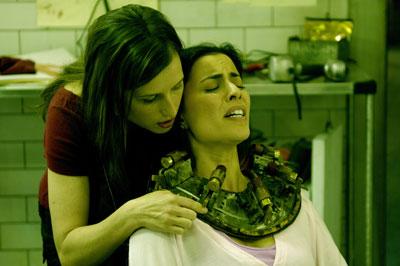
Spine immobilization, when it's indicated, should not be a half-assed procedure.  You either do it right (with a vacuum mattress, collar optional and probably not needed), or you don't.  The criteria to help you decide whether or not to perform it are valid.  Aside from a short-term way to save precious hands from manually holding the spine during something like rapid extrication, I don't think cervical collars have any place in EMS.  Unless, of course, you're a provider who likes to say "I want to play a game":
 

Thursday, July 18, 2013

Stroke of Frustration, Part 2

In Part 1 of this post, I looked at the research surrounding the Cincinnati Prehospital Stroke Scale (CPSS), and found that 1) I wasn't particularly thrilled with the design of the tool 2) ditto the methodology of the derivation and validation studies, and 3) further studies demonstrated a wide range of sensitivity and specificity.  Specificity is the big property for what I need; at the service I work for, we routinely fly stroke patients to our local stroke center.  So I set out to find other stroke screening tools that have been published to see if there was something better.  Here's what I found;

1)  The Los Angeles Prehospital Stroke Screen (LAPSS).  In 2000, the developers of the LAPSS published a study in Stroke validating their screening tool.  Compared with the CPSS, the LAPSS includes history findings such as age, history of seizures/epilepsy, symptom duration, and ambulatory status.  It excludes speech testing from the physical exam.  Their study analyzed 206 patients who had an LAPSS form completed; 36 had a "target stroke".  They found a sensitivity 91%, specificity 97%, PPV 86% and NPV 98%.  Great numbers...but the original studies for the CPSS had similar numbers.  I wanted some additional reporting.

2)  The Miami Emergency Neurological Deficit (MEND) exam.  This exam was developed as part of the Advanced Stroke Life Support course; I've not taken the course, so I'm unfamiliar with the methodology and application of this exam.  It looks like it adds components of the NIHSS to the CPSS to expand the exam and provide some common ground with hospital-based clinicians.  I did find a poster presentation of a study that looked at 51 airlifted patients who had a MEND exam performed in the field; they found that the MEND exam correlated with the NIHSS scale performed at the hospital 90.2% of the time.  The participants of the study used the MEND exam, coupled with online medical consultation with a neurologist, to determine air transport.  Of the 51 airlifted patients, 78.4% were diagnosed with CVA.  The poster concluded that "The MEND exam is a valuable tool when assessing stroke patients in the field and determining the need for air transport".  Again, I've not been trained on the MEND exam (although now I'm looking for a nearby ASLS course!), but I'm not sure I agree; in the study, online consultation with a neurologist seemed to be the mechanism for "pulling the trigger" on air transport.  The MEND seems to be a great way to provide important information to hospital clinicians, but I can't find any research that spells out WHEN to call for air transport.
3)  The Melbourne Ambulance Stroke Screen (MASS).  Meanwhile, across the pond....some enterprising Aussie clinicians decided to combine the components of the CPSS and LAPSS and see if that improved diagnostic properties.  They studied 100 patients who had a MASS completed, and compared the MASS to the CPSS and LAPSS.  They found sensitivities of 90% vs. 95% vs. 78%, specificities of 74% vs. 56% vs. 85%, PPV of 90% vs. 85% vs. 93%, and NPV of 74% vs. 79% vs. 59%, all respectively.  (Note that in this study, the LAPSS didn't work as well as the original validation study, but still pretty respectable).

In the end...I decided that the MASS was probably the best screening tool for my use.  My next choice would be the LAPSS.  But, I think it's important to remember the classic saying "When you've seen 1 EMS system.....you've seen 1 EMS system".  We all have different needs for screening tools, diagnostics, and therapies.  Rather than blindly accept what you were taught, look around for the best tools to stock your toolbox.

Saturday, June 22, 2013

A Stroke of Frustration (Part One)

Working on the ambulance a couple of days ago, I had my first scene flight in quite a while.  A 27 year old male reported classic stroke-like signs and symptoms (slurred speech, facial droop, unilateral weakness).  It was a bit of a confusing case because the patient was so young (but had several CVA risk factors) and not hypertensive.  However, my partner and I were able to rule out all those common CVA mimics like hypoglycemia, Todd's paralysis, drug intoxication, etc.  So we flew him (less than an hour from symptom onset, great times!).

And the patient was discharged from the ED later that day.

It was an uncommon enough case that I presented it to the paramedic class, and we all got into a great discussion about their experiences with CVA mimics, the Cincinnati Prehospital Stroke Scale, and so forth.  As a spinoff of that, I started digging into the research surrounding prehospital stroke scales and screens.  This post, I'll examine the research behind the most-commonly used scale (I think), the Cincinnati Prehospital Stroke Scale (CPSS).

Origin of the CPSS

The CPSS was first published in 1997, in Academic Emergency Medicine.  Here's a link to the free full-text PDF:

http://onlinelibrary.wiley.com/doi/10.1111/j.1553-2712.1997.tb03665.x/pdf

There are some issues I have with the methodology of the study, and the patient population.  The abstract says a "prospective, observational, cohort study" was performed.  When you read the methods section, however, both the "stroke" and "non-stroke" groups were pulled from a previously published study done on thrombolytic therapy.  What criteria did the authors use to include patients in the thrombolytic study?  Did that somehow bias the patient selection for this study?  I don't know.

Looking at the demographics of the two groups, there are a couple of anomalies.  The "non-stroke" group is almost exactly 3 times the "stroke" group.  Curiously, the "non-stroke" group was almost twice as old as well (the authors didn't report a range or standard deviation, so I'm not sure how wide the ages of the two groups were).  That's opposite of what I would expect, considering the epidemiology and risk factors for CVA.

Nonetheless, the authors pushed ahead and found, through statistical analysis, that presence of facial palsy, difference in arm strength, and dysarthria when assessed together in this small group of stroke patients, was 100% sensitive and 92% specific for predicting the presence of stroke.  They decided that dysarthria was going to be difficult to distinguish from aphasia, so they changed their model to "abnormal speech", reran the numbers, and decided that the modified test had 100% sensitivity and 88% specificity.

Heady claims.

My take on the article:  This was a small group of patients (299 total, only 74 of which were diagnosed with stroke).  The inclusion criteria may have been biased by grabbing patient data from a thrombolytic therapy trial (which presumably had some pretty tight inclusion criteria because of the inherent risks of tPA and the like).  Overall, I'm not really comfortable with how the CPSS was created.

Validation Studies

Of course, like any good clinical prediction rule, after being created, the CPSS needed to be validated.  So three of the original authors grabbed two other MDs and published a study entitled "Cincinnati Prehospital Stroke Scale:  Reproducibility and Validity".  Here's a link to the PubMed citation; unfortunately, the article isn't available free full-text:

http://www.ncbi.nlm.nih.gov/pubmed/10092713

Since the article isn't available full-text, let me summarize.  The authors took a total of 2 MDs and 24 EMTs and paramedics, and had them score patients identified as "stroke" or "non-stroke".  The patients were drawn as a convenience sample from the ED, and from patients on the neurology ward (with CVA, TIA, and several other neuro conditions).  The convenience sample in the ED?  The authors wrote "An attempt was made to identify patients with chief complaints that were suggestive of stroke or of other diseases that could be mistaken for stroke".  The numbers, again, were a little disproportionate; 49 in the "stroke" group and 122 in the "non-stroke" group.  Interestingly, the mean age between the two groups was flip-flopped from the original study; 55.8 in the non-stroke group and 62.5 in the stroke group.  (That sounds a little more like what I'd expect).  For the analysis of sensitivity and specificity, the authors eliminated 11 patients with a diagnosis of TIA, further lowering the "stroke" group to 38 (vs. 122 non-stroke patients).  For results, the authors stated that a single abnormality on the CPSS had a sensitivity and specificity of 66% and 87% for physicians and 59% and 89% for prehospital providers, respectively.  3 abnormalities has values of 11% and 99% for docs and 13% and 98% for medics (also respectively).  Their conclusion from the abstract: "The CPSS has excellent reproducibility among prehospital personnel and physicians.  It has good validity in identifying patients with stroke who are candidates for thrombolytic therapy, especially those with anterior circulation stroke."

My take on the article:  Reproducibility, sure.  Validation I'm not so sure of.  The patient group sizes were pretty similarly unequal.  The study doesn't identify any specific inclusion criteria for the ED patients; whoever the doc thought the test might work on in the ED at that particular time made the cut.  I think that the age differences between the patient groups were a little more realistic.  However, the study was conducted in the hospital, not in the environment that EMTs and paramedics would be using the CPSS.  And the sensitivity values for this study were far different from the original published sensitivity from the chi-square calculator; 66% and 59% instead of 100%.  (Additionally, the range in sensitivity for the MD group for 1CPSS abnormal finding was 49-80% to reach a 95% confidence interval.  That seems like a pretty broad range!)

And thus, the CPSS became "validated" and approved for prime-time use.  There were a few other studies I found in my PubMed/CINAHL search that gave me some data on the CPSS; these were studies published to test a different stroke screening device.  I'll point out the other tests in the "Part 2" of this topic, but here's a quick table summarizing the predictive values of the CPSS in those studies:

 
Study
# Patients
CPSS Sensitivity
CPSS Specificity
Kothari R, et al (1997) (original study)
299
100%
88%
Kothari R, et al (1999) (validation study mentioned above)
160 (those that made the analysis)
66% (best of two groups)
89% (best of two groups)
Bray J, et al (2005)
100
95%
56%
Mingfeng H, et al (2012)
540
88.77%
68.79%
Studnek JR, et al (2013)
416
79%
23.9%
Frendl, et al (2009)
154
74%
41%

One caveat; some studies reported sensitivity and specificity values for 1, 2, or 3 items on the CPSS being abnormal.  On the chart above, I listed the values for 1 criteria abnormality.  Actually, let's look at the two studies that did examine multiple-variation sensitivities and specificities:

Study
CPSS-1 Sensitivity
CPSS-1 Specificity
CPSS-2 Sensitivity
CPSS-2 Specificity
CPSS-3 Sensitivity
CPSS-3 Specificity
Kothari, et al (1999)
59%
88%
27%
96%
13%
98%
Frendl, et al (2009)
74%
41%
37%
64%
21%
73%

As you can see, the specificities from a study performed in the field (Frendl) don't even come close to those reported in the ED-based study (Kothari).  I think that's important because we're using these scales/screens to identify patients who might benefit from thrombolytic therapy and get them preferentially to a hospital capable of doing that.  That's a common goal; however, depending on the service you work for, it takes different logistical forms.  At the EMS job I used to have, this entailed driving the patient about 15 minutes further.  At the EMS job I currently have, it entails bringing in a helicopter.  The greater the risk to the patient, the more sure I want to be that the juice is worth the squeeze; for my old job, high sensitivity and lots of false positives are acceptable in the face of the risk.  At my current one, false positives are risky for everyone; I want something with great specificity.

So what does all this data mean?  In my opinion (and this is just that, an opinion.  Read the articles yourself and draw your own conclusions.  And bear in mind I have very little formal training in statistics or research methodology; so if I'm drawing incorrect conclusions, let me know!)....

I think the original patient group that the CPSS was derived from is a little "hinky".  I don't think it was validated as conclusively as the original authors claimed.  Other studies with more subjects have shown a wide variety of specificity values from 23-68%.  I question whether or not the CPSS has actually been "validated" at all.  And I'm looking for an alternative that offers greater specificity, more consistently based on the risks to my patients.

In part 2, I'll post some info about alternative prehospital stroke scales/screens and discuss the strengths and weaknesses of those.

Sunday, June 16, 2013

Father's Day and Vasopressors

First of all, Happy Father's Day to all the dads out there!  Especially to my father, who taught by example what it means to be a man, and who's been nothing but supportive about my career choices and directions.  But enough of that stuff....I'll be calling him this evening :)

In the last post I shared some interesting research I found about using inotropes and vasopressors to treat shock; from that study (incidentally probably some of the best in terms of methodology and sample size), it seems that norepinephrine (a vasopressor) works AT LEAST as well as dopamine (inotrope) in most kinds of shock, and shockingly (ooh, that was a bad pun!) works better in cardiogenic shock.

How can this be?

I found, while messing around online, a great video from the SMACC (Social Media and Critical Care) 2013 conference.  In it, John Myburgh takes a look at the published evidence surrounding various adrenergic agents.  He spent a good deal of time talking about the fact that epinephrine and norepinephrine (or adrenaline and noradrenaline) are molecules inherent to the body, as opposed to things like dobutamine and milrinone.  But I still couldn't wrap my head around why a drug like epi nor norepi, which increases vascular resistance, is less damaging to patients with cardiovascular problems.  And then the lightbulb went off.

(Incidentally, I posted a link to the SMACC video on the Socratic Medic Facebook page.  You have "Like"d it, right?????)

My feeling is that a lot of clinicians, like me, equate "vascular resistance" with arterial vasomotor tone.  That's where the impossibility seems to lie; the heart has to work against greater pressures, which can't be good for the sick heart!  However, "vascular resistance" means much more than arterial tone; it means venous tone as well.  And there lies the answer!

(unfortunately, I can't remember from which website I got this picture.  No copyright infringement is intended!)

There are a couple of things that need to be pointed out:
1)  Perfusion (pressurized flow) depends on two things; pressure and volume.  Different types of blood vessels optimize those two factors.  Arteries, due to their thick walls, have much more to do with pressure than do veins.  As the circled area shows, almost three-quarters of your blood volume is located in the veins at any one time!
2)  The thick walls of the arteries resist dilation much better than the veins do.  Veins have such a tendency to dilate at normal physiology, in fact, that the legs of the muscles act as a "venous pump" to help ensure return of blood to the heart.

All very interesting, but why does a vasopressor improve cardiac output when it really shouldn't, based on increased vascular resistance and an ineffective pump?

Keep in mind, veins get innervated by sympathetic nerves too.  Increasing sympathetic stimulation will cause the veins to constrict, in addition to the arteries.  So what happens when veins constrict?  Pressure increases; the vein walls are more resistant to dilation, and one-way valves in the veins keep blood from backflowing.  So the blood can't go backwards, can't go sideways; it must go forward.

And preload increases.  Since preload increases, stroke volume increases, and the Frank-Starling law behaves as it always does.

CO = SV x HR

What about dopamine?

Dopamine is an inotrope; it increases activity at beta-1 receptors in the heart.  The result is that heart rate and contractility both increase.  But where's the fluid for the heart to pump?  The heart is a positive pressure pump; it can't suck blood in to the ventricles.  Increasing the heart rate and pumping strength without increasing the delivery of blood to the heart (through the veins) isn't a good solution.  It makes sense, then, that adding dopamine (or other inotropes) to increase pumping ability without first assuring adequate preload (with fluid boluses and/or vasopressors) doesn't improve outcomes.  And it also might give insight into why dopamine has so many adverse events like arrhythmias; increase the myocardial oxygen demand without increasing the oxygen supply, and what do you get???

Vasopressors do not just affect the arteries; they affect the veins as well.  Inotropes affect the heart.  If you increase the heart's pumping effectiveness, you'd better also have given it more blood to pump; venous vasoconstriction offers that.  Misuse the drugs on your ambulance at your patient's peril.

Monday, April 29, 2013

A critical look at dopamine

As I was perusing through the online medical education offerings a couple of months ago, an article in the New England Journal of Medicine caught my eye; a comparison of dopamine and norepinephrine in patients with shock:

http://www.nejm.org/doi/full/10.1056/NEJMoa0907118

Since it was a free download, I saved it to my computer and resolved to look at it once things settled down a little bit.  Now that the school semester is drawing to a close, I decided to take a look at it, and was immediately drawn in.  As it turns out, the authors discovered that there were no randomized, controlled trials comparing dopamine with other vasopressor/inotropes.  So they went ahead and did one; enrolling about 1600 patients with shock of all types, they gave either dopamine or norepinephrine and monitored for adverse events, 28-day mortality, and a few other parameters like days spent in the ICU, days spent on mechanical ventilation, and some other stuff that has great relevance in the ICU, but not in the back of the ambulance.

Overall, what they found was, you might say, interesting:


(Image source is the article linked above)

Overall, the choice of vasopressor didn't seem to matter with regards to adverse events, except for arrhythmias.  There, the dopamine group had a statistically significant incease in nasty arrhythmias like ventricular tachycardia and ventricular fibrillation.  The 28-day mortality findings were similar;


(Source: article linked above)
When they measured for 28-day mortality, the survival rates were about equal, except for patients with cardiogenic shock.  Then things changed; if you had cadiogenic shock and were given dopamine, you were more likely to die than if you were given norepinephrine.  This begs the question:

Why does norepinephrine seem to be equal, or better, than dopamine in treating shock?

Well, to start answering that question, we need to go back to the pharmacology book and review what the drugs do.

(Source: www.medscape.com)

Just referencing the chart above, norepinephrine seems to balance between inotropic and vasopressor actions a little better than dopamine, which strongly favors inotropy over vasopressor duties.

In most types of shock, this is not a big deal; the primary problem is not located in the heart, and the heart may be relatively normal.  In cardiogenic shock, however, the heart is dysfunctional and weakened; increasing the sympathetic stimulation and inotropy to it is probably analagous to running your automobile out of oil, transmission fluid, and radiator fluid and then taking it to the drag strip for a night of racing.  Or, it could be the opposite; norepinephrine increases sympathetic tone in the blood vessels, which would result in an increased diastolic blood pressure.  Diastole happens to be the phase during the cardiac cycle when the coronary arteries are perfused.  This could mean that the weakened heart is given its best chance at close-to-normal function with norepinephrine compared with dopamine.

No definitive answer; but then, that's the way that physiology goes.

Which inotrope/vasopressor should be on our ambulances?

Another good question.

Dopamine was a mainstay on the truck by the time that I first ventured into EMS; why that is, I don't know.  It might have been the prototype drug, but I have no information to support this (feel free to comment if you know the answer!).  When I learned about dopamine in paramedic school, it seemed like a neat idea; it could be an inotrope at lower dosages, or it could magically turn into a vasopressor at higher doses.  Truth is, dopamine's a fairly dirty drug (like amiodarone, but that's a whole other rant), without any evidence to support its' superiority in today's formulary.  It may have been the only drug of its' class when EMS began, but it isn't anymore.  And the only RCT comparing it to other agents shows that norepinephrine is just as good, or better in cardiogenic shock (and be honest....how many times have you hung dopamine in a patient who WASN'T in cardiogenic shock?).

Is it time for dopamine to get replaced by "Leave 'Em Dead"?  I'd really like to get your opinions on it....or even better, contrarian research :)

Tuesday, April 16, 2013

A heavy foot, and no evidence...

As a followup, I'd like to point out the last paragraph of the article;

Less is more when it comes to prehospital care, Dr. Davidson said. “A heavy foot on the gas pedal and only a few interventions, such as defibrillation, are what lead to better outcomes,” he said

Does a "heavy foot" on the gas pedal (which I interpret to mean rapid, emergent transport) really lead to better outcomes?

Maybe.  The research in certain areas like hemmorhagic shock, STEMI, and ischemic CVA seems to indicate that time to definitive treatment (like surgery and lactate clearance, PCI, or tPA administration) is associated with improved patient outcomes.  However, the flip side to that coin is that if you're going to die or be seriously injured in EMS, the odds are that you'll be in the patient compartment, unrestrained, driving with lights and sirens.  How do we judiciously balance the risks to ourselves and our patients with the benefits to the patient?

Now, for the second part of that statement, do we have proof that only a few interventions lead to better outcomes?

The wording is tricky, and maybe I'm reading it wrong, but I disagree with that statement as it's printed.  I agree with Dr. Davidson that only a few interventions have good evidence that they improve patient outcomes.  However, I interpret his statement to mean that, conversely, all the other interventions we routinely perform don't improve patient outcomes.  And the simple answer is that we just don't know.

This is dangerous; not only to our patients, but to the profession of EMS as we know it.

EMS has become entrenched in dogma; that may have been acceptable when the profession began, but it's not any longer.  While we look forward at new treatments and therapies, we need to also look back at what we currently do; to validate that it does, in fact, make a difference or at least doesn't compromise other care.

But.

"No evidence" doesn't mean "no benefit".  It just means "no evidence".  It identifies an area that needs validation, not necessarily revision or deletion.  To equate the two means a diminution of potentially significant therapies, procedures, and even entire scopes of practice.  If we have no evidence that 90% of ALS treatments improve patient outcome, does that automatically mean that 90% of the ALS scope of practice should disappear?

I hope not.  "No evidence" in many cases means that no research has been done.  Let's change that!  Whether or not we temporarily suspend a therapy until we can prove its' benefit or lack of harm is a decision left to others besides me (although I have my opinions), but we need to put a halt to the automatic association of "no evidence" with "bad" while we generate evidence.  We need to be open to change, but also not change arbitrarily.  It's a tough balancing act, because most of us naturally fear uncertainty, but it's the way it is.  We have to be constantly asking "why?"; but more importantly, we need to also always be seeking the answer.

How can we call ourselves medical professionals if we don't?

What exactly is "medical direction"?

This last week has been fairly busy; it's the week of PALS, grades are being pulled together and finalized for submission.  I'm prepping to take the NAEMSE instructor course soon (and wondering WHAT I've gotten myself into this time!), and still trying to keep the clinical edge on the ambulance.  Then, I was sent a link by a friend who's been VERY supportive of this blog getting on its' feet (I appreciate it Lungs, but you're killing me here!);

http://journals.lww.com/em-news/Fulltext/2013/04000/Special_Report__Is_Direct_Medical_Command.1.aspx

Lungs knew I couldn't resist.

This story raises addresses so many of the big questions in my mind when it comes to the interaction of medical directors and the EMS personnel they oversee.  I thought I'd put them out there, and then hopefully we can discuss one or more of them in the comments.

Just what exactly is a medical director supposed to do in an EMS service?

My last big purchase of EMS literature was the National Association of EMS Physician's "Emergency Medical Services:  Clinical Practice and Systems Oversight".  It's a four-volume set that discusses all aspects of an EMS system, and here's the interesting part; they talk about the substantial role that the physician should play in influencing or managing those areas.  It's a vast difference from what I've experienced in actual EMS services.  At one of the services I work at part-time, all I have is a name; no one has actually physically been in the same room as the medical director.  At the other one, the medical director comes in about once a year to update the protocols and also historically delivers a lecture at the service's annual conference.  I'm fairly certain that were I to walk up to either of them in street clothes, neither would know who I was.

Why is there such a discrepency?  I think it boils back to the old engineers' saying: "Good, fast, and cheap.  Pick any two."

A medical director is supposed to be the authority in all clinical care by all the employees; that includes education, supervising prehospital care, and quality assurance and improvement.  Since medical care costs money, that medical advocacy rightly spills over into operational, logistical, and fiscal aspects of any EMS service.  EMS is really a unique animal; the physician community seems to realize this, given the recent addition of EMS as a specialty recognized by the American Board of Medical Specialties.  There can now be board-certified EMS physicians, just like EM, ortho, critical care, and surgery.  These are well-educated, experienced docs who recognize that EMS is unique.

Why have we, the EMS providers and managers, failed to realize that?

Many medical directors are paid a pittance compared to what they're tasked with, or worse, asked to volunteer.  The article rightly points out that EMTs and paramedics receive a fraction of the formal education of physicians, yet we're often asked to function autonomously or semi-autonomously in critical situations; that's bound to make somebody's malpractice insurance go up and possibly cause a stress ulcer or two.  And we want our medical directors to undertake this burden for as little as nothing?

Can we really blame them for being absentee medical directors?

Why do we even have online medical control?  Why do we have these ridiculous restrictions on what we can do on standing orders, like performing a cric or sedating before we cardiovert unstable V-tach?  Why do I get permission for 1mg of morphine for a patient with a shattered femur?

I think we just found the answer to that one.

The article correctly, in my opinion, points out that now, most online medical control is being provided by extremely busy physicians who don't have significant out-of-hospital experience; they may or may not know you by the sound of your voice, they probably don't have a lot of time to chitchat with you as they scamper around to see ever-increasing numbers of patients and learn about your knowledge and experience.  Who would they talk to if they wanted to learn more about the EMS system?  The medical director, who may not know you either?

I see a pattern here; the less involved your medical director is with the clinicians, the more on-line medical control in the protocols, and the more conservative on-line direction you get.  This only makes sense to me; if you're a doctor, how much risk to your prestigious, expensively-acquired livelihood are you prepared to take for a volunteer gig?  If you're an ED doc huddled over a radio, how much leeway or power would you want to give to someone who you don't know, whom no one with a medical degree will vouch for, and who cops an attitude anytime you ask why they did or didn't do something to their patient?

How do we fix this?

Let's start at the source.  I think it's time we redefined what "medical direction" and "online medical control" are.

A "medical director", at least according to what I read from the NAEMSP, is more of a "physician mentor".  He or she is heavily vested in the success of an EMS program; works to make sure that medical education is appropriate, acts as a preceptor and resource during prehospital care, and works retrospectively to make sure that an EMS system is providing good quality clinical care (this includes weighing in on things like ambulance deployment and new medical equipment).  Since they provide such an invaluable service to the EMS system, the EMS system compensates them appropriately for the work they put in on behalf of the service.  We need to recognize that "good" is part of the engineer's triad that simply can't be sacrificed.  With a high-quality physician mentor on board, online medical direction changes; the ED docs recognize that a fellow physician is confident enough in EMS clinicians to stake their name, reputation, and livelihood on their actions.  Protocols can become less dependent on taking the ED physician away from their already busy shift.

Online medical direction shifts to a concept of "ED consultation".  With a good physician mentor as an ally, there is far less need to call the ED and ask for permission to do things.  As clinicians, however, we gain an understanding that the actions or inactions we take in the ambulance have consequences to the hospital staff; they, like the patient, have to live with what we do.  Online medical direction starts to move to those cases where we either don't know what to do, or want to make sure that hospital care is consistant with prehospital care.  "Hey doc, I've got this patient.....how do you want me to manage this for you?".

If we want to redefine our profession for the betterment of our patients, we also need to redefine our relationships with those who have the ultimate say in medicine; the physician.  Our link to the medical community is our medical director.  It's time to stop neglecting that relationship and start building a lasting bridge to the medical community.

Following the engineers' triad, of course.